01 / Toilets
Toilets Explained
Understand the main toilet styles, from wall-hung pans to traditional high-level cisterns and shower toilets.
- How each style looks
- What installation usually involves
- What to check before buying
Understand what bathroom products are, how the main types differ and what to consider before choosing—without getting lost in technical language.
Explore this section ↗
Clear, visual introductions to the products found in a bathroom. Learn what each type is, how it differs and what to consider before choosing one—without getting lost in technical language.
Understand the main toilet styles, from wall-hung pans to traditional high-level cisterns and shower toilets.
A simple guide to the fittings that control water and help define the look of a bathroom.
Explore common shapes, installation styles and materials for baths and basins.
Find out how vanity units and storage choices affect space, appearance and organisation.
Learn the difference between common shower arrangements and the features people use every day.
Small choices can make the room feel coordinated and complete.
These guides focus first on the product type and its purpose. Detailed brand reviews and model-by-model comparisons can be added later as a separate resource.
We’ll look at toilet styles one by one—how they look, how they work, what installation they need and what to consider when choosing one for a bathroom.

The pan is fixed to a strong concealed installation frame, so it appears to float above the floor. With no pedestal touching the floor, cleaning underneath is easier and the room can feel more open. The cistern and pipework are hidden behind a wall or service panel, so the frame, wall depth and access for maintenance must be planned before tiling.
Best for: modern bathrooms and carefully planned renovations.

The pan stands on the floor but sits close to the wall or a furniture unit. The cistern is concealed, giving a tidy appearance without suspending the pan. The flush plate usually provides access to the concealed cistern, so it is important to choose a system that can be serviced later.
Best for: streamlined bathrooms where you want a floor-mounted pan.

The cistern is attached directly to the toilet pan, making one compact, familiar unit. The cistern lid gives relatively straightforward access to flushing parts, which can make servicing simpler than with concealed systems. Choose between an open-back pan, which leaves room for pipework, and a fully shrouded version that sits neatly against the wall.
Best for: many standard Irish bathrooms and straightforward replacements.

The cistern is mounted high on the wall and connected to the pan by a long flush pipe, often operated by a pull chain. The elevated cistern creates the traditional silhouette associated with period bathrooms. It needs a suitable wall for secure fixing and enough height and clearance for the cistern, pipe and chain.
Best for: period homes and traditional bathroom designs.

The cistern is mounted on the wall at a lower height than a high-level model and connects to the pan with a short flush pipe. It keeps a traditional look but does not need the same tall wall space. Check the dimensions and the wall fixing requirements before choosing a model.
Best for: classic bathrooms where space above the toilet is limited.
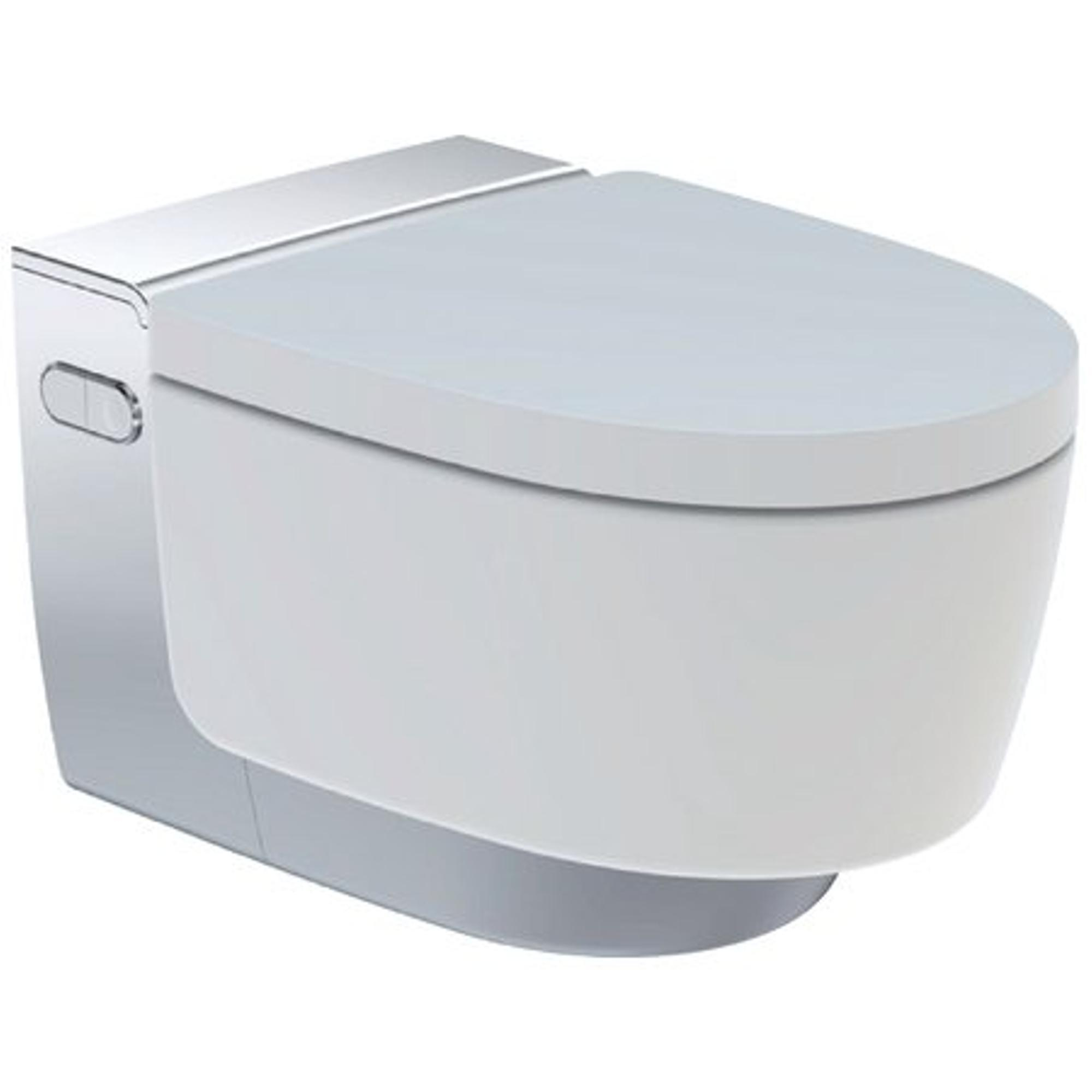
A shower toilet combines a toilet with integrated washing functions; some models also offer a heated seat, warm-air drying, odour extraction or automatic features. Requirements vary by model, so check electrical supply, water connection, servicing and controls before installation.
Best for: people looking for extra comfort and integrated hygiene features.
Several toilet photographs are from SONAS Bathrooms and Smithsonian National Museum of American History; the images should be checked for permission and attribution before publication. The smart-WC card uses a product photograph of the Geberit AquaClean Mera Comfort; check image permission and attribution before publication.
Learn how everyday fixtures developed alongside changing expectations of hygiene, comfort and design.


