
The History of Taps
From basic water outlets to mixer taps and carefully engineered brassware.
Read more ↗A visual journey through bathing culture, sanitation and the people who helped transform the bathroom into a familiar part of everyday life.
Explore this section ↗
From communal bathing and early sanitation to the private bathroom: this timeline follows bathing, toilets, showers and the systems that made them possible. Dates are approximate where evidence is debated.
In ancient Egypt, washing was part of daily life as well as religious and ceremonial practice. Archaeological evidence from some wealthy homes points to designated washing areas, while most people relied on simpler ways to obtain and carry water. These spaces were not bathrooms in the modern sense, but they show how hygiene and domestic life were already connected.

At Mohenjo-daro, builders created a large, carefully sealed brick tank with steps leading down into the water. It is commonly called the Great Bath. Its exact purpose is still debated, but it demonstrates remarkable planning around water, drainage and communal bathing. Indus cities also had drainage channels and bathing areas in many homes—an extraordinary achievement for the ancient world.

Greek bathing took place in homes, public facilities and spaces connected with athletic training. People used basins, tubs and water poured by hand; in some settings bathing was social, while other washing was practical and private. Greek approaches helped shape later ideas about exercise, bathing and the body, though facilities varied greatly between cities and social groups.

Roman bath complexes brought together cold, warm and hot rooms, pools, changing areas and sometimes exercise spaces. Hypocaust systems circulated hot air beneath floors, while aqueducts and drains supported large-scale water use. Baths were important social places, but Roman sanitation was not the same as modern public health: access and cleanliness varied, and shared facilities could still spread disease.
There was no single medieval approach to bathing. Public bathhouses continued in some European towns, while people also washed at home using bowls, ewers and portable tubs. Access depended on place, wealth, water supply and local custom. Rather than a simple story of everyone abandoning bathing, the period shows how washing practices changed across regions and centuries.

English courtier Sir John Harington described a water closet in his 1596 pamphlet A New Discourse of a Stale Subject, Called the Metamorphosis of Ajax. His device used a water-filled cistern and a flush to clear the bowl; he installed a version for Queen Elizabeth I. It was an important early design, but it was expensive, needed a reliable water supply and did not immediately become common in ordinary homes.

Scottish inventor Alexander Cumming patented a flushing toilet design featuring an S-shaped trap beneath the bowl. The water held in the bend helped block unpleasant sewer gases from entering the room. This small but crucial plumbing idea became part of the foundation of modern toilet design.

During the 18th and 19th centuries, better pipework, improved water supplies, drainage and manufacturing gradually made dedicated bathrooms more practical. At first, bathrooms were costly and more common in wealthier homes. In the Victorian era, ceramic sanitaryware, baths, washbasins and high-level cistern toilets became more recognisable, while expanding urban water and sewer systems helped make indoor sanitation possible for more households. The change was gradual, not an overnight invention.
Thomas Crapper (1836–1910) was a London plumber and sanitaryware businessman whose company sold and promoted toilets during the Victorian era. He did not invent the flush toilet: designs and patents came before him. His firm helped popularise modern sanitary fittings and developed improvements to toilet mechanisms, including the ballcock and trap-related innovations. The company’s name became famous, but the slang word “crap” existed before Crapper was born.

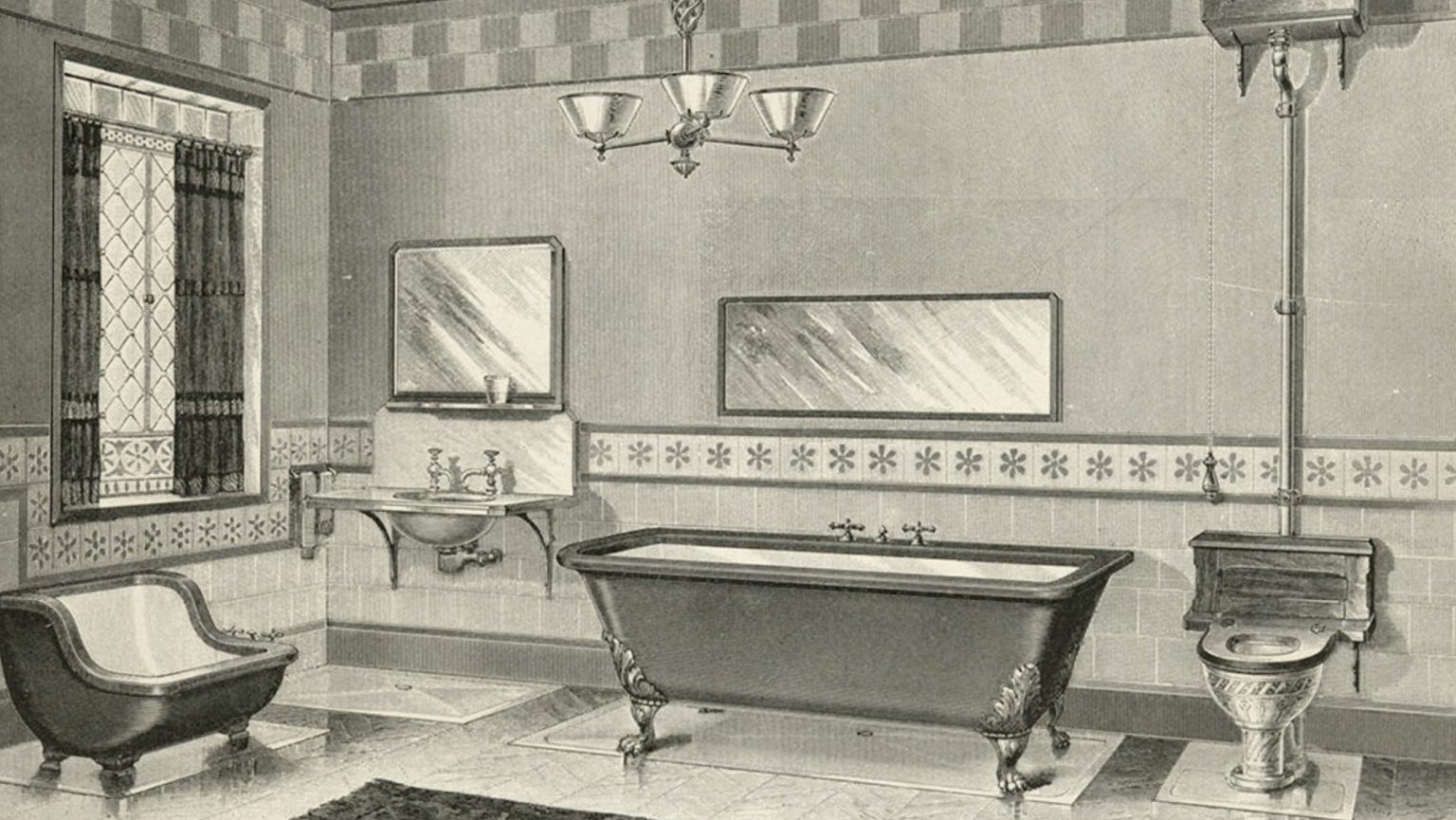
By the late 19th century, the combination of a bath, washbasin and toilet was becoming familiar in better-equipped homes. Decorative tilework, patterned floors, high-level cisterns and freestanding baths reflected both new plumbing technology and the period’s taste for ornament. Many families still lacked a fully plumbed bathroom, so this image represents an emerging standard rather than a universal experience.

As plumbing networks expanded and sanitaryware could be mass-produced, bathrooms became more common in ordinary homes. Toilets, baths and washbasins were designed for easier cleaning, and showers became increasingly practical as hot-water systems improved. Colour, tile patterns, compact layouts and fitted furniture made the bathroom a designed room—not just a utility space.
Today’s bathroom can combine efficient toilets, thermostatic showers, walk-in layouts, steam, lighting and digital controls. Design priorities also include water use, easy maintenance, accessibility and long-term reliability. Modern products sit at the end of a long story: people have always needed water and privacy, but the technology and expectations around the bathroom continue to change.

Historical accuracy note: 1596 refers to John Harington’s early flushing water closet; Alexander Cumming received a key patent in 1775; Thomas Crapper later manufactured and promoted sanitaryware but did not invent the flush toilet. Images are illustrative and should be checked for licensing and attribution before the site goes live.
Each story follows an everyday fixture through the inventions, habits and changing expectations behind it.
From basic water outlets to mixer taps and carefully engineered brassware.
Read more ↗
How showering developed from early devices and public facilities into a modern daily ritual.
Read more ↗
A story of communal bathing, domestic comfort and changing ideas of cleanliness.
Read more ↗
Follow the long development of flushing toilets and the systems behind them.
Read more ↗